
10 Proven Strategies to Optimize Meta Ads ROI in eCommerce
 By Juan Cruz Giusto ·
Meta Ads has never been as complex as it is right now.
Advantage+, bid caps, CBO vs ABO, creatives with or without AI, audience exclusions…
The options keep multiplying, but which ones actually drive results?
In eCommerce, your time is limited and every euro you spend has to deliver a return.
That’s why I’m sharing 10 proven strategies you can implement in your Ads Manager to unlock new levels of growth - and, as always, profitably.
1. Broad Audiences: Less Control, More Results
Targeting audiences by specific interests and lookalikes is a 2020 strategy that’s eating your margin and driving up your CPAs.
Meta has been saying this for years: its algorithm processes millions of data points to find your ideal customer more accurately than any manual targeting ever could.

Your best bet is to keep the audience as broad as possible, setting only gender, age, and location.
The key insight: Your creative is your real targeting, not your audience settings.
If you want to reach soccer fans, don’t specify it in Meta. Design creatives that naturally resonate with them, and Meta will automatically find the people most likely to buy.
That way you save money and get the most out of the algorithm.
2. Don’t Split TOFU/BOFU Campaigns
To exit the learning phase and optimize performance, ad sets need roughly 50 conversions per week.
And splitting up your ad sets works directly against that principle.
Let me explain with a pretty typical example.
- TOFU campaign (excluding abandoned carts): $1,000 budget
- BOFU campaign (abandoned carts only): $1,000 budget
After one week, we see the following results:
- TOFU: 10 conversions, $100 CPA
- BOFU: 50 conversions, $20 CPA
- Average CPA: $33
The maximum CPA you can pay without losing money is $25.
Logic tells us to pause TOFU since it’s the worst performer.
But without realizing it, you’d be cutting off the flow that feeds your winning campaign.
TOFU generates demand; BOFU captures the last click.

If you fragment your ad sets this way, it’ll be very hard for the real driver of results - the TOFU campaign - to exit the learning phase, so it ends up delivering mediocre, unstable results.
The solution: Consolidating campaigns gives the algorithm access to the user’s full journey, from impression to conversion, producing more stable and efficient results.
3. Creative Diversification
As we saw in point 1 - the creative does the targeting - so its variety determines the market you’re advertising to.
If all your ads target the same demographic and psychographic profile, you’re capping your growth potential.
Say you sell MATCHA, and all your ads are aimed at women aged 20 to 30 with acid reflux. That’s going to be your potential audience, even though many more people could benefit from your solution.
The same thing happens if you lead with the product. The number of people who know what matcha is and what it’s for is much smaller than the number of people who struggle to sleep or are looking for healthy alternatives to coffee.
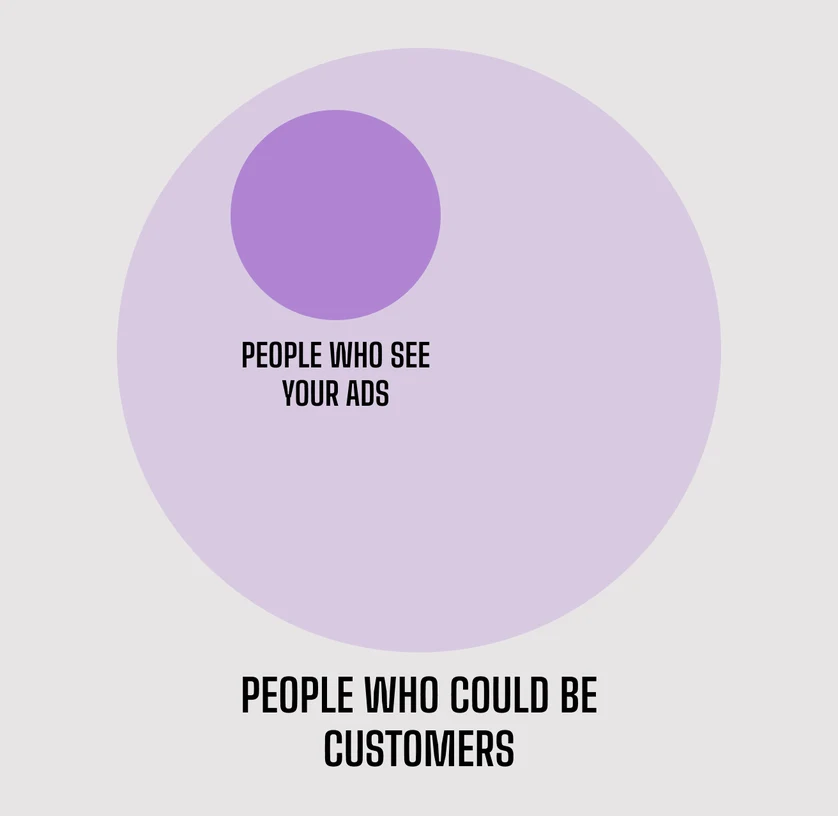
To unlock new levels of spend and growth on Meta, you need to produce different creatives at every level:
By awareness level:
- Unaware of the problem
- Aware of the problem, not the solution
- Aware of the solution, not your product
- Aware of your product, not your brand
- Aware of your brand but haven’t bought
- Have bought from your brand
By format and placement:
- Reels, Feed, Stories, Threads
- Multiple video aspect ratios and lengths
- Different background images, colors, and even people
Work with every format you can to grab as much ad “real estate” as possible.
By buyer persona:
- Demographic and psychographic segmentation
- Different purchase motivations
- Variation in price sensitivity
The more variety you have, the bigger your potential market gets, and the more you can scale without losing efficiency.
Ideally, you should build a framework to systematically test which combinations work and which don’t (and yes, we can give you a hand with that).
4. Bid Caps
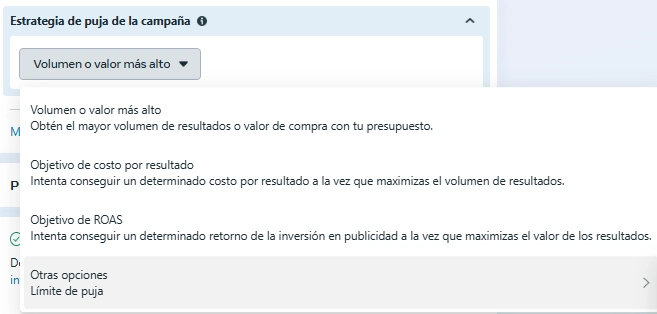
Unless you have an unlimited budget and margins that can absorb high CACs, bid caps are mandatory to protect your profitability.
Bid caps tell Meta to avoid spend that doesn’t meet your CPA or ROAS thresholds.
If you don’t set them, Meta optimizes for conversion volume at the lowest possible cost, which often ends up being more than you’re willing to pay.
This setting protects your Marginal Contribution, and you only spend money when Meta is (almost) sure it can hit your targets.
If you want to dig deeper into this, I recommend reading the post From Losses to Profits: How to Turn Meta Into Your Profitability Machine
5. Exclude Recent Buyers
Customers who bought recently are already in your ecosystem: you have their email, they follow you on social media, and often you have their phone number too.
Why would you pay for ads to reach them when you have at least 3 practically free channels to get to them?
Solution: Exclude recent buyers from your Meta campaigns.

Your Meta campaigns will probably show “worse results” in Ads Manager, but that’s because they’ll be driving sales from new customers, not from people who would have bought from you anyway.
If you’re wondering how recent is “recent”?
It’s hard to give a specific number, since every eCommerce is different.
Ideally, you should analyze how your buyers behave and how many days, on average, it takes them to make a second purchase.
If you need help figuring this out, we can give you a hand.
6. Creative Volume
I want you to stop reading this post right now and go to your Ads Library.
How many ads do you have running?
Now go look at your competitors. How many do they have?
Now take a look at three of the best eComs out there:
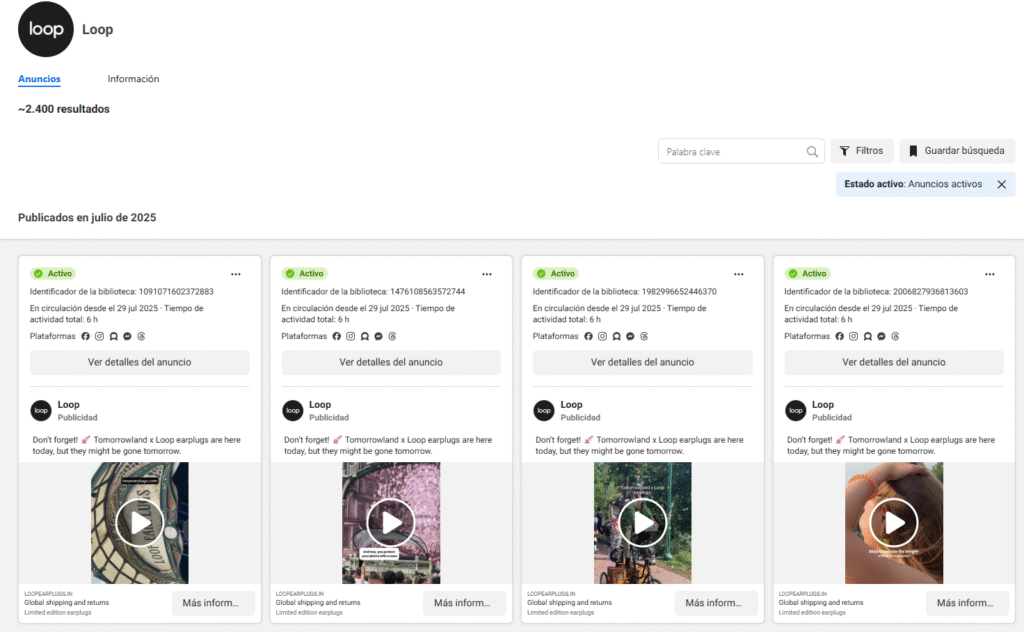
The gap is probably massive.
But I want you to understand what’s possible with efficient processes and people.
To scale your eCommerce and Meta Ads profitably, you don’t just need variety, you also need volume.
I guarantee you right now that if you triple the number of ads you run on Meta, your CPAs will drop like never before.
The ball’s in your court.
7. Incrementality Tests: Separating Real Results From Inflated Attribution
We all know Meta lies and inflates its results - whether it means to or not is another discussion.
The only definitive solution is to run incrementality tests, which let you understand the true impact of your campaigns.
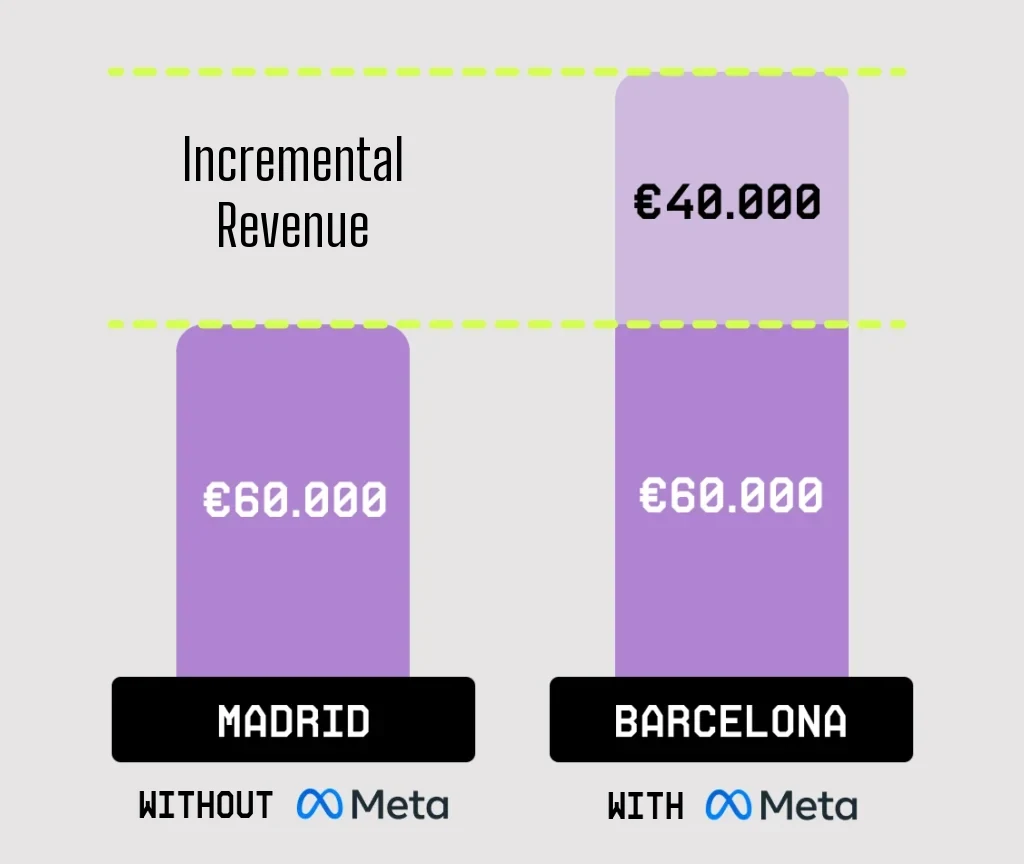
That’s why, if you’re spending more than $40,000 on Meta Ads, you need to start running Incrementality Tests. Otherwise you risk pouring money into campaigns that look profitable but actually aren’t.
So, step one: talk to your Meta rep to see if you can run them together.
If you don’t have enough spend, what I recommend is setting your attribution model to 7-Day Click. It’s usually the perfect balance between conversion volume and the accuracy of reported results.
8. Meta AI for Creatives
Yes, sometimes it adds weird background music.
It adds elements the creative team never designed.
It changes background colors.
And very soon it’ll generate images from nothing more than a photo of your product.
It might look a little strange and “off-brand.”
But Meta claims it performs better and lowers acquisition costs.
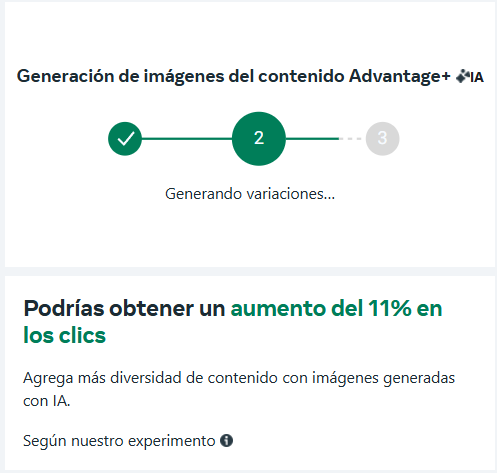
And if we think about it logically, they have no reason to lie to us.
Get your creative team and brand directors on board. It’s literally one click of effort that can unlock thousands of euros in extra revenue.
9. Testing vs Scaling Campaigns
A lot of brands run two separate types of campaigns:
- Testing: Limited budget for new creatives
- Scaling: Large budget for proven creatives
It might seem logical, since you’re giving new creatives the chance to prove themselves on a limited budget.
If they get a good ROAS, they’re approved and move to the scaling campaign. If not, they get switched off and die.
But this logic has three problems:
First: It contradicts Meta’s recommendations on simplifying and centralizing conversions.
Second: You’re assuming your judgment beats the algorithm when it comes to making decisions. Remember, Meta has millions of data points that help it determine whether a creative will perform well now and in the future. You don’t.
Plus, strong past performance doesn’t guarantee the same performance in the future or at higher budgets (read The Breakdown Effect by Meta).
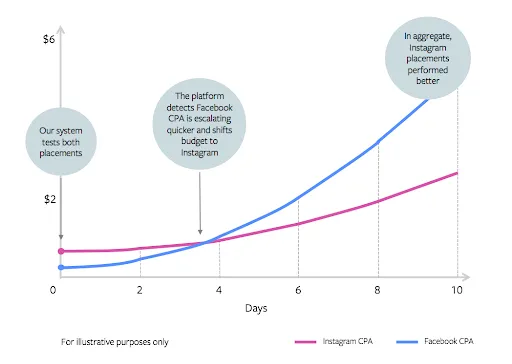
Third: If you’re not using cost per result or ROAS goals, your testing campaign probably has terrible CPA/ROAS, since it’s been spending on ads that don’t actually work. And those costs have to be factored in when you calculate the channel’s average CPA.
Luckily, the solution is simple.
Set cost per result goals, trust Meta’s intelligence, and assume it’ll spend on a creative when it believes it can hit your efficiency targets (CPA or ROAS).
That way you consolidate campaigns, centralize learning, cut unnecessary spend, and let Meta’s machine learning decide which creative gets the budget.
10. Ad-to-Landing Page Consistency: Optimizing the Full Journey
We spend tens of thousands of euros producing ad content - photo shoots with models, hiring influencers, and giving away product in exchange for UGC - only to send the people who click to a generic PDP or Category Page.
Example: A user sees a specific vest on Instagram, clicks, and lands on the homepage, where they have to manually hunt for the product and color that caught their eye in the first place.
Or a sleep supplement grabs your attention because the ad talked about 20-year-old students during exam season sleeping better and handling stress.
You click and land on a generic product page with zero mention of students, exams, or stress.

Remember, the ad is less than 50% of the user journey. The post-click experience determines the final conversion.
And when there’s no connection in the visuals, the message, or the overall consistency, the user bounces.
The solution: Ensure visual, messaging, and experience continuity from ad all the way to checkout. That consistency will improve your conversion rates and ROAS.
Maximizing Meta Ads Within a Holistic Strategy
There you have it: 10 strategies to get the most out of your Meta Ads.
But remember, Meta is only truly effective when there’s an integrated marketing strategy behind it, with financial clarity.
None of the tactics above matter if you’re losing money on every sale.
If you run out of stock because you scaled too fast.
Or if you haven’t scaled enough to cover your fixed costs.
That’s why at ASTEROI we help eCommerce brands doing over 1M in revenue scale profitably with a holistic view of the business, from strategy and experimentation to finance.
Because at the end of the day, Ads Manager is just one tool in your arsenal, and real growth happens outside of it.
The next step?
Analyze your specific situation and build a sustainable growth plan.
We look forward to talking with you!