
From Losses to Profits: How to Turn Meta Into Your Profitability Machine
 By Juan Cruz Giusto ·
Meta looks out for its own interests, not yours.
And if you want it to start working for you, you have to force it.
Otherwise, it’ll spend your money while your profitability goes down and theirs goes up.
Let me explain what’s going on and how you can make Meta (and any other ad platform) work to increase your profit, not just your revenue.

The Real Goal of Ad Platforms
As I explained in Your ROAS Doesn’t Mean Shit, the ultimate goal of ad platforms isn’t for your eCommerce to make money.
It’s to increase THEIR PROFITS.
At the end of the day, they answer to their investors. In their decisions, your profitability is secondary.
In their decisions, your profitability is completely secondary. What they really want is for you to keep spending more and more money while you believe they’re doing their best for your bottom line.
Wondering how they pull it off without you noticing? In three very subtle ways.
3 Ways Meta Manipulates Your Results
Okay, maybe manipulate is too strong a word. Let’s say Meta plays on what you don’t know to dress up its results and make them look prettier in 3 ways:
1. They inflate ROAS without you noticing
Have you ever seen a spectacular ROAS in your Ads Manager while your revenue stays flat?
Their dashboards say they’re generating more money than they’re actually producing.
But… how do they inflate it without you noticing?
They take credit for sales that would have happened anyway.
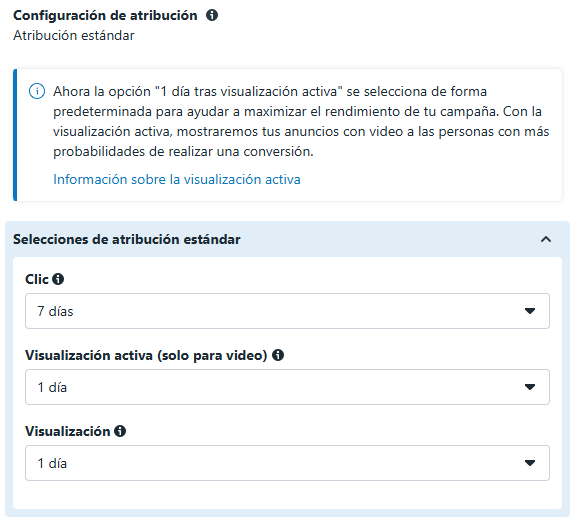
By default, Meta uses a 7-day click and 1-day view attribution setting. If someone clicks your ad and buys within 7 days, or sees your ad and buys that same day, Meta raises its hand and says: “I generated this sale.”
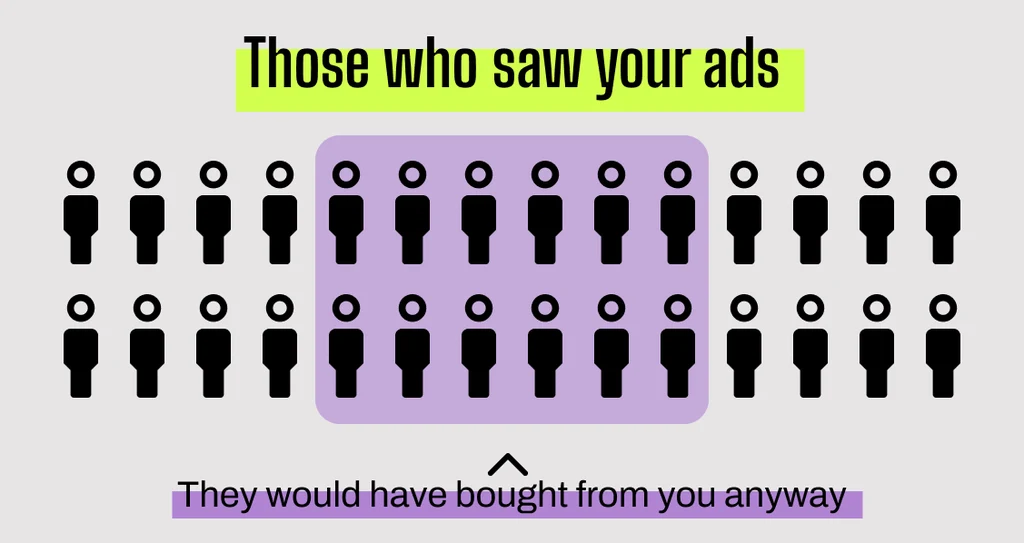
The reality: A percentage of these buyers would have bought from your store with or without advertising. I’ve seen it reach 50% in some cases.
The result: Meta takes credit for sales it didn’t really generate. And your ROAS looks better than it should.
2. The default bid strategy
The Bid Strategy determines when your ad gets shown and how much you pay for that to happen.
When you create a campaign, the bid strategy is set to “Highest volume or value” with this description: “Get the most results or purchase value for your budget.”
Sounds good, right? Who doesn’t want to generate as many sales as possible?
But a crucial piece is missing: At what cost are we going to generate those sales?
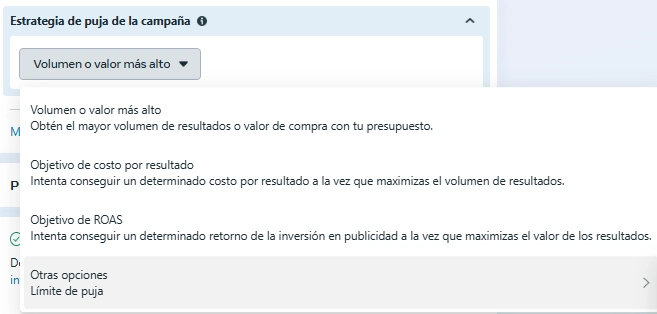
With this strategy, Meta will try to keep the cost as low as possible, but a lot of the time that number is higher than your business can afford.
The result: Campaigns that lose money.
Let me rewrite the description of this strategy to make it more realistic:
“We’ll do our best to get you customers profitably, but if we can’t, no big deal, we’ll keep spending”
More honest, right?
Luckily, there are other bid strategies that cap your losses and protect your profitability.
We’ll get to them later when we talk about solutions.
3. They make it hard to exclude recent buyers
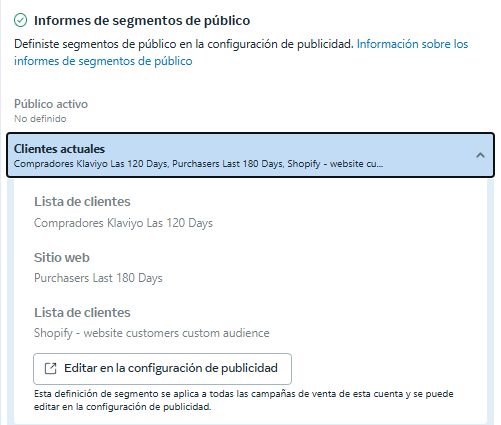
If you’ve been in marketing for a while, you know it’s good practice to exclude recent buyers from your campaigns.
These are people who already know you, follow you on social, and whose emails (and in many cases phone numbers) you already have.
Why would you pay for ads to reach them when you have at least 3 practically free channels to get to them?
It’s in Meta’s interest that you don’t exclude them. Their metrics look better with low acquisition costs, but the reality is different.
These people would have bought from you anyway with an email or an Instagram post.
Now you know the 3 tactics the platforms use to make you spend more without increasing your profit.
With this knowledge, we can build campaigns that work to put money in your bank account, not take it out.
Tool 1: Incrementality Tests
Incrementality tests are a scientific way to measure the true impact of your advertising.
What you do is decrease, pause, or increase your spend in certain geographic regions and see how your revenue evolves there compared to places where you haven’t touched anything.
The reality is a bit more complex, but that’s the concept: an A/B test where Control stays the same, the Variant changes the ad spend, and you evaluate how revenue evolves.
Practical example:
On Meta we spend $40,000 across 2 similar cities, Madrid and Barcelona ($20K in each).
Each city does $100,000/month in revenue.
In its reports, Meta says we’re generating $50K in revenue in each region. In other words, a 2.5 ROAS.
To validate this, we run an incrementality test.
We pause Madrid for a month and watch how its revenue evolves.
After 30 days, we see Madrid has gone from $100,000 in revenue to $60,000, while Barcelona is still at $100,000.
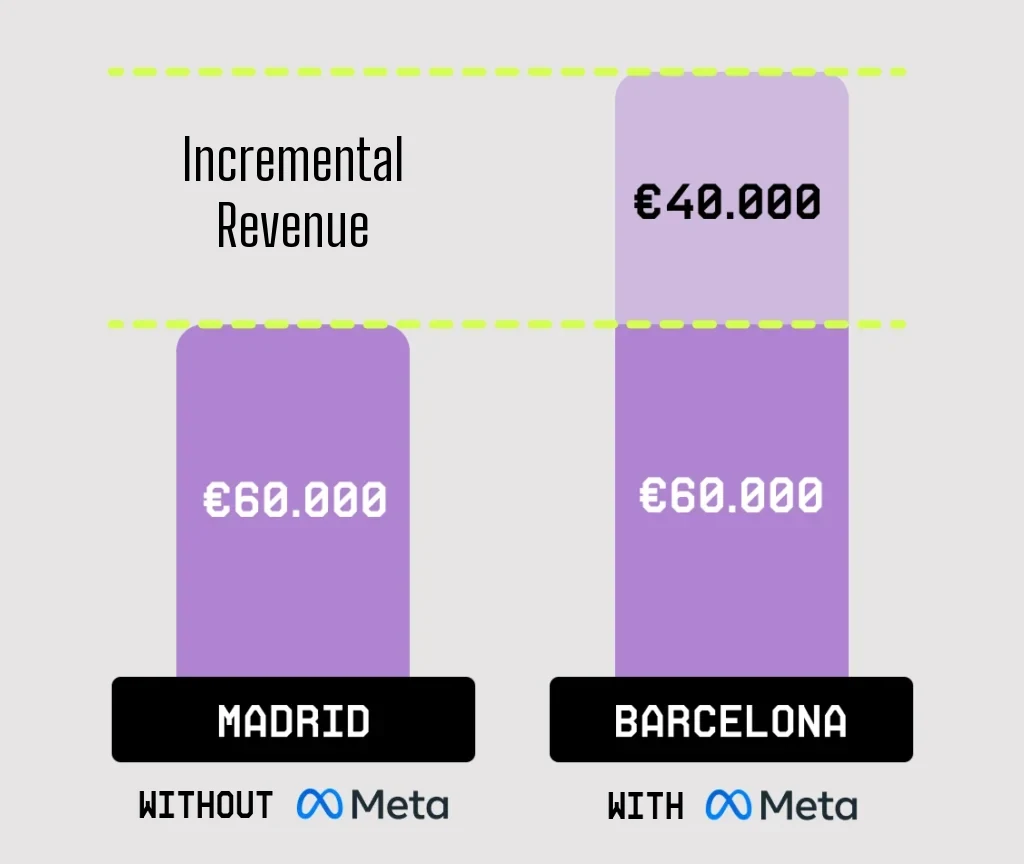
This test tells us that Meta actually generates $40,000, not $50,000.
In other words, it’s taking credit for more sales than it should, and its ROAS isn’t 2.5, it’s 2.
Incrementality Factor
To “offset” the platform’s extra attribution (or, in some cases, its missing attribution), we can apply what’s called the “Incrementality Factor.”
Formula: Real Revenue from the Test / Revenue Reported by the Platform
In our case: 40,000/50,000 = 0.8 or 80%
The next time you look at Ads Manager, you know Meta’s results need to be cut by 20% to reflect the incrementality factor and the over-attribution.
For incrementality tests to be reliable, you should run them regularly as you test new channels and strategies, increase budget, or launch new ads.
But applying the incrementality factor to your campaigns is a great first step.
Tool 2: Bid Caps
Meta and Google offer other bid strategies besides “Highest volume or value.”
Unlike the default strategy, where the campaign spends the entire budget regardless of cost, these other strategies will spend if and only if Meta believes it will hit the cost per result you set.
Why this is key: The system’s limit stops being efficiency and becomes volume.
Example setup:
If you sell a $100 product:
- 21% goes to VAT
- 25% Variable Costs
- And you want a 30% profit
Then your cost per result on Meta should be $24.
The 3 strategies Meta offers:
- Cost per Result Goal: “I want to pay at most X euros, on average, for each conversion.” Meta will bid above and below, but it will try to keep the average from exceeding that cost.
- ROAS Goal: “For every euro I spend, I want to get back at least X euros.” For example, a 4:1 ROAS means that for every €1 spent you want €4 back.
- Bid Cap: “I want to pay at most X euros for each conversion, and you can’t go over.” Meta will only bid below your target.
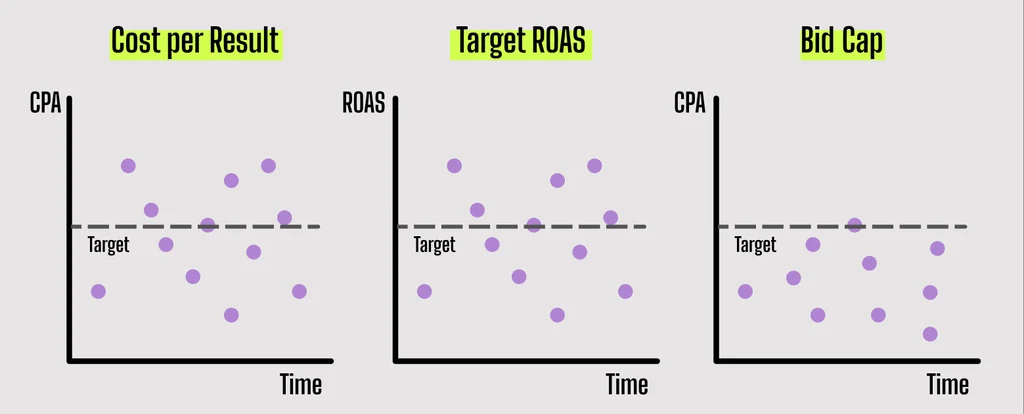
Any of the 3 will protect your profitability and make Meta spend only when it thinks it can do so profitably.
Putting It All Together: The Complete Formula
You now have the two most powerful tools to make Meta work for you and your profit.
Now let’s connect the dots with the examples above:
- We set a $24 CPA with Cost per Result
- We found that this type of campaign has an Incrementality Factor of 0.8
Final calculation: Target Cost × Incrementality Factor = 24 × 0.8 = $19.2
What it means: When you see a $19.2 CPA in your campaign, you’ll know it’s actually $24.
That way, you make sure your campaigns only spend when they hit your profitability target.
I know, the math can be a little confusing.
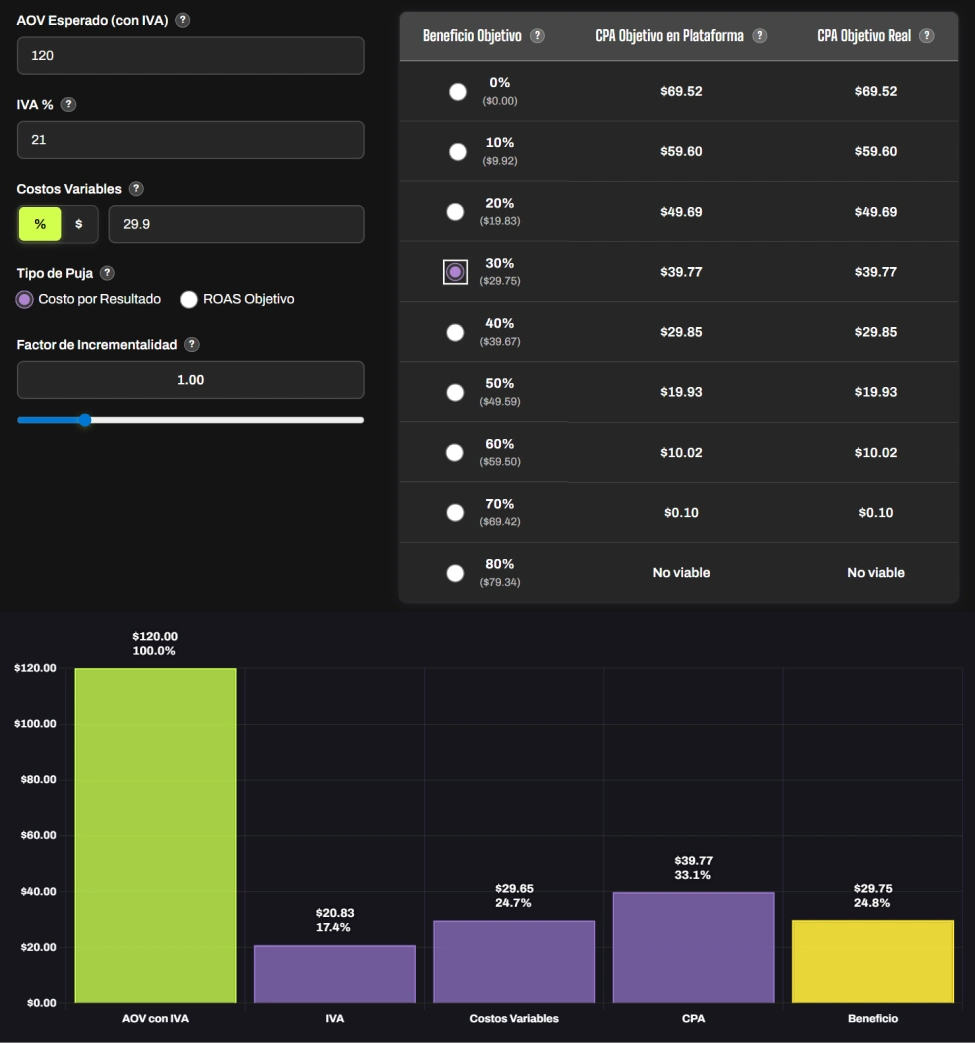
That’s why I built an interactive calculator so you can quickly work out the CPA/ROAS for your campaigns. All you need to do is:
- Enter your expected Average Order Value (AOV)
- Enter the VAT %
- Enter your Variable Costs
- Choose the bid type
- Set the Incrementality Factor
With this data, you’ll know which CPA/ROAS you should set to hit your Target Profit.
Your Next Step
You now know how Meta manipulates your results and the two tools you have to make it work for your profitability.
Action plan:
- If you spend enough, talk to your Meta Rep about incrementality tests
- Get your Factor and apply it to your CPAs
- Review your Ads Manager. You’ll probably find unprofitable campaigns
- Recommendation: Turn them off. It’s better not to sell than to lose money
- Duplicate the campaigns and set up a different Bid Strategy
Now the limiting factor will be the quality of your ads and your website, which is what determines how much the campaign spends.
Need help making the shift from “Growth at all costs” to “Profitable growth”?
At ASTEROI we specialize in scaling 7- and 8-figure eCommerce brands with a focus on profitability, not revenue. From analyzing your company’s P&L, to building a forecast of 30+ metrics, setting daily targets for each one, and following a system to make sure they’re hit.
If you want to grow profitably, take the first step and book a FREE profitability analysis.